Ozmen photo

Tire reviews & comparisons

Ozmen

Hi Folks. I'm Ozmen, and I work as a tire designer. I understand finding a tire isn't easy, as there are so many variables involved. But with me around, tire selection would never bother you again.

LT Mean On A Tire

What Does LT Mean On A Tire?

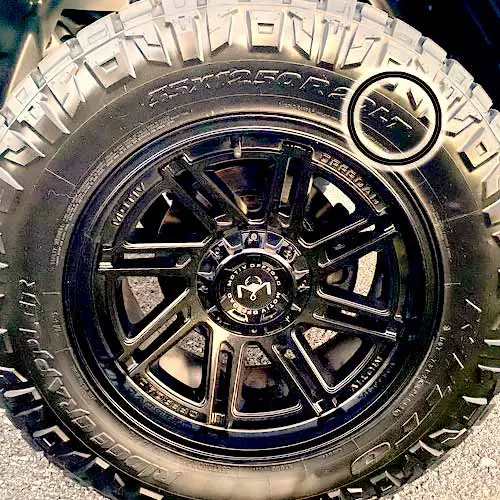
So basically Light Truck (LT) tires are made for carrying higher load and handle rougher terrains compared to P metric sizes. That's why these tires are ideal for heavy-duty vehicles such as SUVs, vans, and pickups. Their reinforced sidewalls can handle additional stress of off-road driving and with a larger contact patch (carrying heavier weight), they provide the needed stability and along with it safety. Though keep in mind, that these tires are not as budget friendly in comparison, and speaking of which, with them you also spend more on fuel, as they generate larger rolling resistance values.
All-Terrain Tire on RAM

All-Terrain vs All-Season Tires

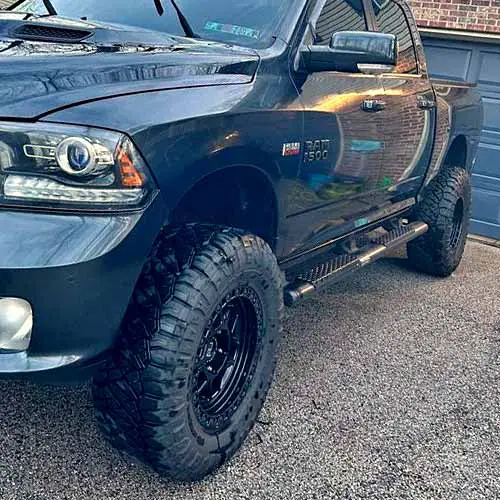
Compared to all-terrain, all season tires aren't able to provide good enough traction on mud, sand, rocks, or even gravel, that's because they don't have the needed durability, nor their tread pattern has biters on them. Whereas A/T tires give you powerful full depth notches everywhere, and these grip the rough terrains from all directions. Moreover, with powerful stone ejectors and wider grooves, these tires are better at self cleaning. But on pavements, all-season tires are much more reliable comparatively, as with them, you get a better steering response, wet traction and overall comfort.

common all-terrain tire size

What is the most common all-terrain tire size?

265/70R17 is the most common all terrain tire size. Though keep in mind that there are a lot of factors contributing to that. And in order to explain them all, I've talked about section width, aspect ratios, and rim sizes and how they affect the overall performance.

Mud-Terrain Tire

Difference Between Mud-Terrain And All-Terrain Tires?

All-terrain tires are better suited for driving on paved roads and in all-season conditions, with superior performance on wet and snowy roads, as they offer closed up rib placements and shoulder lugs that provide more stable lateral/directional traction and steering response. Mud-terrain tires, on the other hand, are better suited for off-road conditions, particularly in mud, with wider combination of lateral and longitudinal grooves, and thicker sidewall lugs that provide better traction on rocky, sandy and muddy terrain. Moreover, they are more durable with 3-ply sidewalls and Kevlar reinforcements, and have deeper tread depth. Though they are also very louder, and their heavier built make them uncomfortable on roads. And yes, these tires also don't get to have ample speed ratings, or sever winter ratings like the 3pmsfr (though they do have M+S).

All-Terrain Tire Fuel Usage

Do All-Terrain Tires Get Worse Gas Mileage?

When it comes to all-terrain tires, although you do have to compromise a little in the fuel efficiency department, compared to on-road tires, you can reduce the gap by choosing more on-road oriented design. Some all-terrain tires are just more streamlined towards highways, and they don't use as much of the fuel as the other aggressive options. These tires include some great option, and out of them, the best for fuel is Firestone Destination A/T2. Read Next: https://tiredriver.com/all-terrain-tires/

All-Terrain Tires For Daily Driving

Are All-Terrain Tires Good For Daily Driving?

So basically all-terrain tires can be really great when it comes to daily driving. As these give you with all season traction having 3 Peak Mountain Snowflake ratings, and they also don't disappoint on roads with their good enough comfort, traction and steering response. And off-road you get all the durability and crawling capability, if your daily driving needs it.

Are all-terrain tires good for rocky terrains?

Are all-terrain tires good for rocky terrains?

All-terrain tires comes in a lot of shapes and features, and there are some which are definitely worth when it comes to rocks no doubt. So these tires are really good for this type of terrains. Though compared to more aggressive tires like mud-terrain, they are going to lack a little, but the good thing is the margin is pretty low. And considering they are much better than them on pavements, I think that can be ignored.

Tire Load Index And Range

Tire Load Index And Range (Ply) Ratings

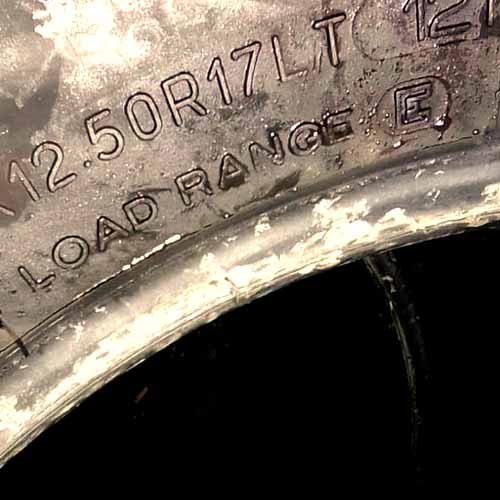
So basically there are 2 different types of tires P metric and LT. With P metric tires, you get a less stronger inner construction, so these tires aren't able to pick up as much weight, though they get to offer superior fuel economy and tread life in return. On the other side, the LT tires get to be more aggressive and offers superior stability whilst carrying a heavy cargo, or even a big vehicle's weight. In more simpler words, P metric tires are on-road tires, whereas LT are used off road. They are also divided when it comes to load range and ratings as the P metric sizes use the newer metric, which is called load index, where they are assigned with a number (written on the sidewalls), and with it you can tell, how much weight a tire can carry. And with LT sizes, Load rating metric is used which can be cross-referenced with an old bias ply construction as well, that's why its also called ply ratings. Here letters are assigned, going from C, to F, and these tell how much weight a tire can carry (which is more compared to P metric, so these tires are used off-road and for towing).

Check Tire Tread Depth With Penny

How To Check Tire Tread Depth With Penny?

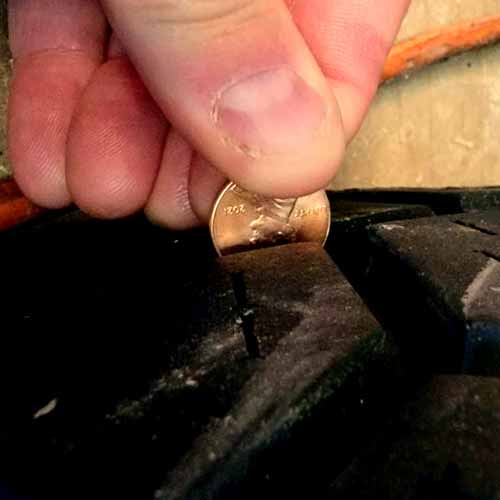
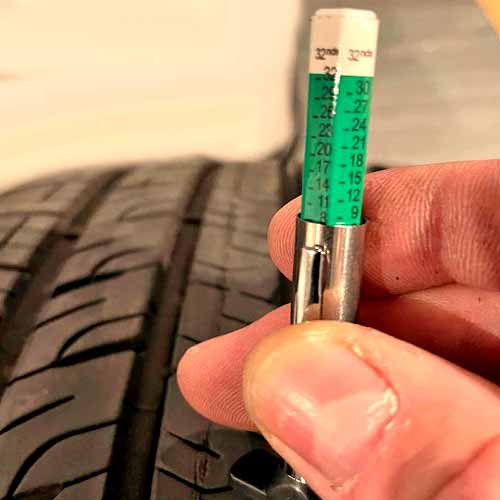
It does not matter whether it's the Lincoln's head or George's. These test only give you a rough idea in determining tire tread depth. Though if you must, just know that if you insert both of these coins down and their heads are not visible, that in case of penny, that would mean, the tread depth is less than 2/32". And in case of quarter, it would mean, the tread depth is more than 4/32". So you can get a rough estimate, if you are in a hurry by using both of these as 2/32" means replacing your tires right away, where 4/32" means, that you should be replacing tires in the coming time. Though compared to both, its much better if you consider getting a tread measuring gauge.

All-Terrain Tires Slow You Down

Do All-Terrain Tires Slow You Down?

You can not get a lot of on-performance out of all-terrain tires, as they are not built for that. But still, there are some really unique all-terrain tires, that allow you to go on minor off-road terrains, whilst keeping on-road stability, grip and handling in check. I've mentioned all these tires above. All of them have speed ratings up to H (most commonly), and on one A/T tire, you even get to find a size with V. But still a majority of the tires are what you'd call slow, as their aggressive pattern with ton of biters, and wider grooves, don't allow them to have good enough directional grip, and with it ample speed ratings.

Increase Tread Life

How To Increase Tread Life?

So in order to improve your fuel economy, make sure you have the right kind of tire size first of all. And if you do, make sure you get your tires aligned every 6 months, rotated every 5k miles, and properly balanced as well. Also remove any extra weight form your vehicle, and drive humbly.

Nitto Recon Grappler

Nitto Terra Grappler G2 vs Recon Grappler

When the Nitto Recon Grappler first came in, I though it was a hybrid, and it looks like though it's made out of Toyo RT and Nitto Ridge (both are part of a same organization). But this tire is an all-terrain, though you can say, it's one of the most aggressive A/Ts. That's why it offers better off road traction, with self cleaning tread and superior 3 ply sidewalls durability rendering it better on mud, rocks, and gravel. On the other side, the Terra Grappler is more on road aligned, though still it lacks to it's bigger brother in the wet traction department. That's because it's sipes are more optimized on snow, and its better performing over there, that's why it has the 3 peak mountain snowflake rating (unlike the Recon). Top all-terrain tires, my picks, just one click away: https://tiredriver.com/best-all-terrain-tires/