A spare tire is one of those things you barely think about until the day you really need it. The problem is that many drivers do not know what kind of spare they have, how far they can safely drive on it, or whether it is even usable when an emergency happens. That confusion has become more common as more new vehicles have moved away from traditional spare tires and toward inflator kits or run-flat setups.
So, are spare tires still worth caring about? Absolutely. A properly maintained spare can get you off the shoulder and back to safety. A neglected one can turn a simple flat into a much bigger problem.
Quick Answer
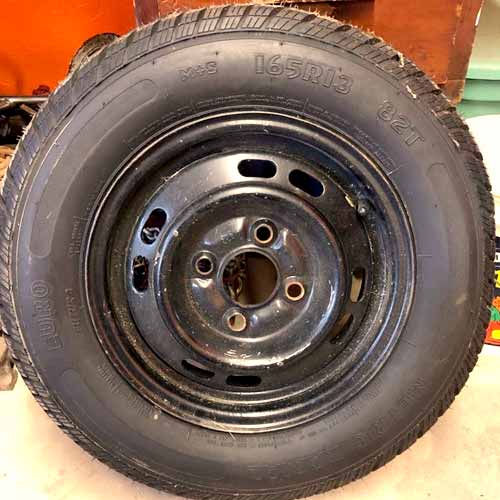
There are two main spare tire categories most drivers will deal with: full-size spares and temporary compact spares, often called donuts. Full-size spares are the best from a safety and usability standpoint because they more closely match your regular tires. Temporary spares save space and weight, but they are designed only for short-distance, low-speed emergency use. As a rule of thumb, AAA says not to exceed 50 mph or 50 miles on a donut-type spare, while Michelin similarly says temporary spares are not meant for day-to-day use.
If your vehicle has no spare, you may have either run-flat tires or a tire inflator/sealant kit instead. Both can help in some situations, but they have clear limits. Inflator kits usually only work for certain tread-area punctures and do not solve sidewall damage, blowouts, or a tire that has come off the rim.
Main Pointers
- A matching full-size spare is the most useful and least compromise-heavy spare option.
- A donut spare is only a temporary emergency tire and should usually stay under 50 mph and about 50 miles, unless your vehicle or tire says otherwise.
- Your spare tire needs maintenance too, including monthly pressure checks and inspections before long trips.
- If you have a matching full-size spare, it can often be included in a five-tire rotation. A temporary-use spare should not be included in rotation patterns.
- If your vehicle has an inflator/sealant kit instead of a spare, learn its limits before you need it. These kits usually do not fix sidewall damage or major punctures.
Types of Spare Tires
Full-Size Spare Tires
A full-size spare is the closest thing to a “real” backup tire. It is the same general size as the tires already mounted on the vehicle, which means it is far less likely to compromise basic handling, braking feel, or road manners the way a compact spare can.
When it is a matching full-size spare, it may even be included in your normal tire rotation schedule so all five tires wear more evenly over time.
USTMA guidance specifically says a temporary-use spare should not be included in rotation, while a full-size spare can be part of the pattern when appropriate.
The downside is simple: full-size spares take up more space and add more weight. That is one reason many automakers moved away from them in the first place.
Temporary or Donut Spare Tires
A donut spare is smaller, lighter, and easier to package in the vehicle. It exists to get you from the breakdown point to a tire shop, not to restore normal everyday driving.
Because it is smaller and built with emergency use in mind, it reduces traction, limits stability, and usually comes with strict speed and distance limits.
AAA says a donut-type spare should generally stay below 50 mph and 50 miles, and Michelin also warns that temporary spares do not have the same speed or mileage capability as a full-size tire.
That means cautious driving matters. On a compact spare, avoid sharp cornering, abrupt braking, and unnecessary highway use.
How Long Can You Drive on a Spare Tire?
The answer depends on the type of spare.
A matching full-size spare can usually function much more like a regular tire, though you still need to confirm pressure, condition, and fitment. A temporary spare is a different story. Most guidance centers on keeping speed under 50 mph and limiting driving to roughly 50 miles, or less if the tire sidewall or owner’s manual says so.
The reason is not just durability. A compact spare changes the vehicle’s handling balance, traction reserves, and sometimes braking behavior because it does not match the rest of the tire set. That is why it should be treated as an emergency solution only.
How to Keep Your Spare Tire Ready
This is the section I would definitely add, because most spare-tire articles skip the maintenance side.
Your spare tire is not “ready forever” just because it has never touched the road. USTMA says spare tires, including both full-size and temporary spares, should be checked monthly and before long trips. The pressure should be checked with an accurate gauge, and USTMA notes that many T-type temporary spares require 60 psi.
A smart spare-tire check should include:
- air pressure
- tread condition
- sidewall cracking or bulges
- signs of dry rot or age
- wheel corrosion or damage
- the jack, wrench, and locking wheel key if your vehicle uses one
You may also want to check other types of tread wear damage.
If your car uses a sealant kit instead of a spare, check the sealant expiration date too. AAA advises drivers to know where the kit is, understand its limitations, and replace expired sealant as required.
And if you keep an extra spare or seasonal tire in storage at home, Michelin recommends a cool, dry, clean indoor space away from sunlight, heat, ozone, and chemicals to help prevent rubber degradation.
What If Your Vehicle Has No Spare Tire?
That is no longer unusual. AAA has noted that many newer vehicles do not come with a spare tire as standard equipment, and instead rely on either run-flat tires or a tire inflator/sealant kit.
Option 1: Run-Flat Tires
Run-flat tires are designed to keep supporting the vehicle for a limited distance after air loss. USTMA says many run-flat tires can travel for limited distances after pressure loss, often up to 50 miles at 50 mph, depending on the product and manufacturer’s instructions.
They help eliminate the need for a traditional spare, but they still have distance and speed limits and should be inspected professionally after being driven in a low-pressure condition.
Option 2: Tire Inflator / Sealant Kits
Inflator kits are compact and save trunk space, but they do not solve every flat. AAA says these kits work only in specific circumstances, generally when the puncture is in the center tread area and the damaging object remains in the tire.
They do not work for many sidewall failures, blowouts, pothole damage, or cases where the tire has come off the rim.
That makes them useful, but not equal to a real spare.
Best Spare Tires to Consider
Because spare tire fitment is vehicle-specific, there is no single universal “best spare tire” for every car. The best option is really the best spare setup for your vehicle and how you drive.
Matching full-size spare
Best for normal handling, easier long-term use, and five-tire rotation when the vehicle allows it.
Temporary donut spare
Great for saving space, but only for short-distance, low-speed emergency use.
Run-flat tire setup
Useful when your car was designed around run-flats, but still limited by time, speed, and product rules.
Inflator and sealant kit
Helpful for small tread punctures, but not a fix for sidewall damage, blowouts, or severe wheel/tire damage.
1. Best Overall: Matching Full-Size Spare
If your vehicle can carry one, a matching full-size spare is the strongest all-around choice. It preserves the most normal handling, can often be included in tire rotations, and is the least restrictive emergency option.
2. Best for Limited Space: OEM Temporary Spare
If cargo space matters, a factory-style donut spare is still far better than having nothing, as long as you treat it like the short-range emergency tool it is.
3. Best for Vehicles Sold Without a Spare: Model-Specific Compact Spare Kits
For vehicles that came with only an inflator kit, model-specific compact spare kits can be a smart upgrade. Modern Spare, for example, markets vehicle-specific compact spare kits for many current models.
4. Best Backup to Keep Even If You Have a Spare: Inflator + Sealant Kit
An inflator/sealant kit is not a full replacement for a spare, but it can still be worth carrying, especially for small tread punctures where you want a fast roadside fix. Just make sure the sealant is not expired and know its limitations.
Spare Tire Care Checklist
Do these before road trips and as part of your monthly tire routine.
- Check spare tire pressure
- Inspect sidewalls for cracks, bulges, or dry rot
- Confirm jack, lug wrench, and wheel-lock key are present
- Inspect the spare wheel for rust or damage
- Check sealant-kit expiration dates if your vehicle uses one
- Review your owner’s manual for spare-specific limits
Helpful Answers
Frequently Asked Questions
Quick answers to the most common spare tire questions drivers ask.
01 How long can I drive on a donut spare?
In most cases, keep it under 50 mph and around 50 miles, unless your tire or owner’s manual says otherwise.
02 Do I need to check the spare tire’s pressure?
Yes. The spare should be checked monthly and before long trips, just like your regular tires.
03 Can I include a spare tire in rotation?
A matching full-size spare often can be included in a five-tire rotation. A temporary-use spare should not be rotated into regular service.
04 Will a tire inflator kit fix every flat?
No. Inflator kits usually only help with smaller tread-area punctures. They generally do not fix sidewall damage, blowouts, or severe wheel/tire damage.
05 What is the best spare tire option?
If your vehicle can accommodate it, a matching full-size spare is usually the best all-around option for safety, usability, and minimal driving compromise.
Conclusion
Spare tires are not outdated. They are just more varied than they used to be. A matching full-size spare is still the best emergency tire option if your vehicle can accommodate one. A donut spare is a useful backup, but only for short, low-speed use. And if your vehicle came without a spare, you need to understand whether you are relying on run-flats, an inflator kit, or roadside assistance alone.
The biggest mistake is not choosing the wrong spare. It is assuming the spare you have is ready when you have never checked its pressure, age, or condition.
