Ozmen photo

Tire reviews & comparisons

Ozmen

Hi Folks. I'm Ozmen, and I work as a tire designer. I understand finding a tire isn't easy, as there are so many variables involved. But with me around, tire selection would never bother you again.

Cooper Discoverer RTX

Cooper Discoverer RTX Review

So overall, it all comes down to this. The Cooper Discoverer RTX is a versatile tire that handles well on both highways and light off-road terrains, offering strong dry grip and responsive steering due to its well-designed lugs and ribs. It provides reliable wet traction and decent snow grip, despite lacking a 3PMSF rating. And its performance is somewhat mixed off-road, excelling on rocky terrains but struggling on sandy and muddy surfaces due to limited sidewall lugs. Moreover, the tire ensures a quiet, stable ride, though its firm composition compromise a little when it comes to subjective comfort. What else? Yes, while it showcases great fuel efficiency, its lower UTQG rating indicates a potentially shorter tread life, though you still gt 50,000-mile warranty.

Starfire Solarus AS

Starfire Solarus AS Review

So what did we learn about this tire? Well let me break it down for you guys. The Starfire Solarus AS is great when it comes to the following. Dry Road Performance: It offers remarkable grip and directional handling, making driving on dry roads a stable and controlled experience. Fuel Efficiency: Its design promotes good fuel economy, offering users great value over the lifespan of the tire. But it needs improvements in the following areas. Wet and Winter Traction: The tire struggles to provide optimal traction during wet and snowy conditions, mainly due to a lack of sufficient flexibility and biting edges. Ride Comfort: Due to its firm tread rubber composition aimed at enhancing durability, the tire compromises somewhat on ride comfort, not offering a plush ride experience. Tread life: It's UTQG shows that it's tread is going to wear out pretty fast.

Cooper Adventurer HT

Cooper Adventurer HT Review

Let me conclude the whole thing with bullet-points. The Cooper Adventurer HT excels in: Fuel efficiency due to its lightweight structure and shallow tread depth. Directional grip, offering straight-line stability facilitated by its central rib and optimized block distribution. Wet traction capabilities, supported by effective aqua channels and sipe distribution. Reduced road noise and increased stability, prioritizing on-road performance. The tire lacks in: Off-road performance, especially on muddy and rocky terrains due to lesser void structure and the absence of multi-angle biters. Comfort, as its design can result in a less smooth ride compared to other options in the market. Performance on sandy surfaces and deep snow, indicating a preference for highway driving over rugged adventures.

Michelin Defender 2

Michelin Defender 2 Review

In conclusion, the Michelin Defender 2 proves to be a reliable choice for those prioritizing dry handling, fuel efficiency, and extended tread life. Although its rigid structure might compromise on comfort and winter performance, it manages to deliver a commendable performance in other key areas. Its innovative design ensures respectable wet traction and noise control, offering a well-rounded, economical option for daily driving. Despite some shortcomings, its long lifespan and adept handling in dry conditions make it a worthy consideration for the discerning driver.

Michelin Primacy 4+

Continental PremiumContact 7 vs Michelin Primacy 4+

The Continental PremiumContact 7 excels in: Dry Grip Performance: With a larger middle contact patch and deeper sipes, this tire offers superior traction on dry surfaces. Wet Surface Handling and Braking: The tire showcases impressive performance in wet conditions, particularly in handling and braking, surpassing many high-performance summer tires in this aspect. Cornering Abilities: Its well-designed shoulder lugs ensure a perfect blend of rigidity and flexibility, providing excellent steering response and with it cornering, as seen by greater (measured) lateral g forces. While the Michelin Primacy 4 Plus is better in: Fuel Efficiency: Due to a stiffer composition and reduced rolling resistance, this tire promises better fuel efficiency. Vibration Absorption: Featuring a more adaptable tread structure with multiple grooves and notches, the tire is more proficient at absorbing road vibrations. Tread Life: Combining a slightly deeper tread depth and a firmer rubber composition, this tire lasts longer.

Bridgestone WeatherPeak on Explorer

Bridgestone WeatherPeak Review (Detailed)

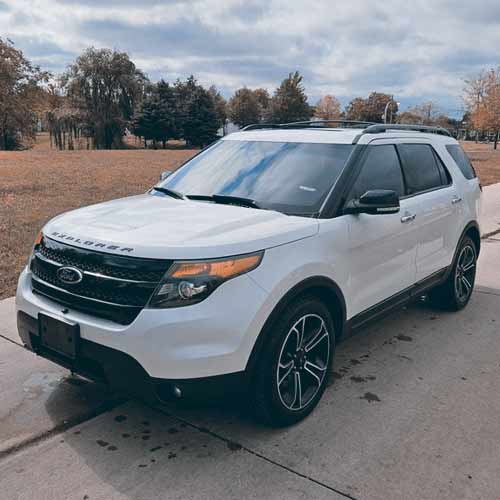
So overall, the Bridgestone WeatherPeak is a solid choice for an all-season tire, but it leans more towards enhanced wet road performance than dry. And yes, although its grip is limited, its a trade off with its lower rolling resistance which aids fuel economy and tread wear longevity. Moreover, the tire also offers superb comfort levels, though it still needs to work a little on its noise production.

BF Goodrich HD Terrain vs KO2

BF Goodrich HD Terrain vs KO2

Construction: Both BF Goodrich KO2 and HD-Terrain tires have comparable durability despite differences in construction. Ride Quality & Noise: HD-Terrain absorbs road vibrations better, whereas KO2 produces less noise and resonance. On-Road Performance: KO2 has a slight edge in dry grip and steering responsiveness, while HD-Terrain offers good handling stability. Wet & Winter Performance: KO2 outperforms in wet traction and snow particle capture, whereas HD-Terrain struggles with water evacuation and gripping hard-packed snow. Rugged Terrain Performance: HD-Terrain offers superior traction on sand and mud, while KO2 performs better on rocks and dirt-filled roads. Tread Life: Both tires offer similar tread mileage despite different characteristics.

Pirelli Scorpion Verde

Pirelli P Zero vs Scorpion Verde All Season

Well let me put things plain and simple here. The Scorpion Verde All Season excels in: Tread noise: The continuous running shoulder rib of the tire results in lesser noise generated by air particles colliding with the walls. Absorbing on-road vibrations: The softer tread rubber with higher silica composition and a softer inner cap ply effectively absorb road imperfections, resulting in a more comfortable driving experience. Providing wet traction: Balanced combination of siping, notches, and chamfered edges, as well as tread flexibility, maintain a strong grip on wet roads. Having a longer tread life: The harder tread compound resists rapid wear, and an additional layer of polyamide enhances durability, resulting in a higher UTQG rating and deeper tread depth. The Pirelli P Zero excels in: Dry performance: Asymmetrical longitudinally aligned ribs, compact design, and in-groove notches in all directions lead to shorter braking distances and higher lateral traction values during cornering. Fuel efficiency: Streamlined design with average shallower tread depth and stiffer overall composition results in lesser lug distortion and energy consumption, thereby improving overall fuel economy.

WeatherPeak

Bridgestone Ecopia vs WeatherPeak

Both tires exhibit specific strengths and weaknesses across various categories. Let me summarize those for you. Simply put, the Bridgestone WeatherPeak demonstrates superior tread life, on-road vibrations management, wet traction, and winter performance, while the Ecopia EP422 Plus outperforms in tread noise, hydroplaning resistance, and fuel consumption. With a more advanced tread compound, full-depth interlocking sipes, and winter tire-like siping contribute to its extended lifespan, superior handling in wet conditions, and above average winter performance. Whereas the Ecopia EP422 Plus having a lighter structure, and larger shoulder gaps contribute to its impressive hydroplaning resistance, marginal noise levels, and lower rolling resistance, translating to better fuel economy.

Pirelli P Zero

Pirelli P Zero vs PZ4

In conclusion, the comparative analysis between the two boys showcases distinctive strengths and weaknesses for each tire. The Pirelli PZ4 stands out for its superior fuel consumption rates due to its aerodynamic structure and shallower tread depth, which also contributes to its superior tread life, reflected in a higher UTQG rating. Its design further aids in reduced tread noise and better wet performance, with notable hydroplaning resistance. Conversely, the Pirelli P Zero excels in dry traction, offering superior grip owing to its central lugs configuration, facilitating shorter braking distances and faster acceleration. Moreover, its softer rubber composition enhances ride comfort by effectively absorbing road irregularities, albeit at the expense of a shorter tread life and higher tread noise. In essence, the choice between the Pirelli PZ4 and the Pirelli P Zero comes down to prioritizing either durability and fuel efficiency or comfort and dry traction performance, illustrating a tangible trade-off between tread life and ride comfort.

Bridgestone Ecopia vs Turanza

Bridgestone Ecopia vs Turanza

Both series showcase distinct strengths, designed for different driving conditions and preferences. The Bridgestone Turanza tires excel in dry performance due to their compact longitudinally aligned ribs, in-groove notches, and compacted shoulder lugs. And this results in shorter braking distances, more direct steering response, and yes, an appreciable lateral traction as well. On the other hand, the Bridgestone Ecopia tires showcase superior wet and winter traction, fuel economy, and ride comfort, where their balanced mix of siping, notches, and chamfered edges, along with tread flexibility, provide a strong grip on watery conditions. And yes, with lighter construction you also get enhanced fuel efficiency. And with softer tread rubber enriched with silica and a softer inner cap ply, you also get better ride comfort too.

Bridgestone Ecopia vs Yokohama BluEarth

Bridgestone Ecopia vs Yokohama BluEarth

In the end, both these tire series have their strengths and weaknesses. The Yokohama BluEarth series excels in hydroplaning resistance, tread life, noise reduction, and winter performance. Their hydroplaning resistance come from their efficient tread designs, and their longer tread life is because of their stiffer rubber compositions. On the other hand, the Bridgestone Ecopia series stands out in wet grip, dry traction, impact absorption, and fuel consumption. These tires offer greater and better siping, featuring interlocking design, allowing for superior wet braking and handling capabilities. Moreover, their softer rubber compounds provide the necessary absorbing road vibrations, resulting in a more comfortable ride.