Many drivers confuse tire rotation and wheel alignment because both affect tire wear, ride quality, and overall vehicle performance. But they are not the same service, and one does not replace the other.
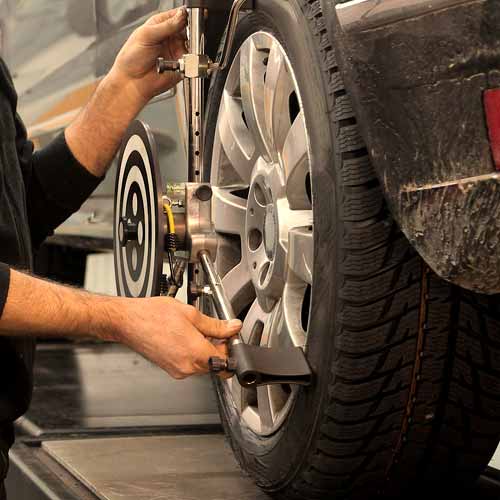
Tire rotation means moving tires from one position on the vehicle to another so they wear more evenly over time.
Wheel alignment means adjusting the suspension angles, mainly toe, camber, and caster, so the tires meet the road correctly and the vehicle tracks straight.
In simple terms: rotation manages tire wear, while alignment corrects tire angle and vehicle tracking.
Quick Answer
If you only want the short version, here it is:
Tire rotation is routine maintenance that should usually be done every 5,000 to 8,000 miles, or according to your owner’s manual.
Wheel alignment is not a mileage-based routine in the same way. It is usually done when symptoms appear, after suspension work, after hitting potholes or curbs, or when uneven wear suggests the wheels are out of alignment.
That means you may need tire rotation regularly even when alignment is fine, and you may need alignment even if your tires were recently rotated.
Key Takeaways
- Tire rotation and wheel alignment are different services
- Rotation helps tires wear more evenly
- Alignment corrects how the tires point and contact the road
- Rotation is normally done on a schedule
- Alignment is usually done when needed or when symptoms appear
- Rotation will not fix misalignment
- Alignment will not reverse existing uneven wear
The role of suspension in tire rotation and wheel alignment
Before comparing the two services, it helps to understand the suspension system.
Your vehicle’s suspension connects the wheels to the vehicle and helps control how the tires stay in contact with the road. Parts like struts, shocks, springs, control arms, tie rods, and ball joints all play a role in how the vehicle rides, steers, and handles impacts.
This matters because wheel alignment is set through the suspension geometry. If suspension parts wear out, loosen up, bend, or shift, the wheel angles can move out of specification. Once that happens, tires may no longer sit flat on the road the way they should, which can lead to faster and more abnormal tread wear.
Tire rotation does not adjust suspension geometry. It simply changes tire positions to spread wear more evenly.
What is tire rotation?
Tire rotation means changing the position of the tires on the vehicle according to a recommended pattern.
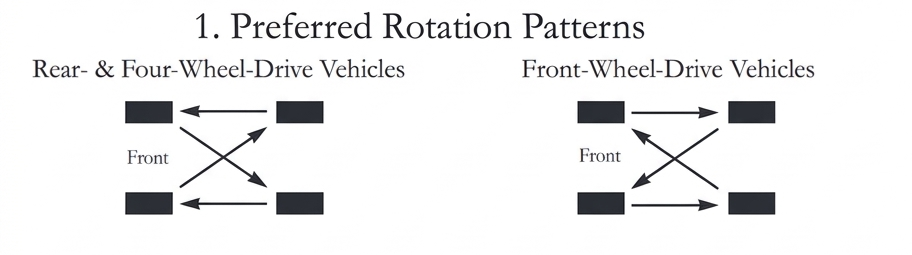
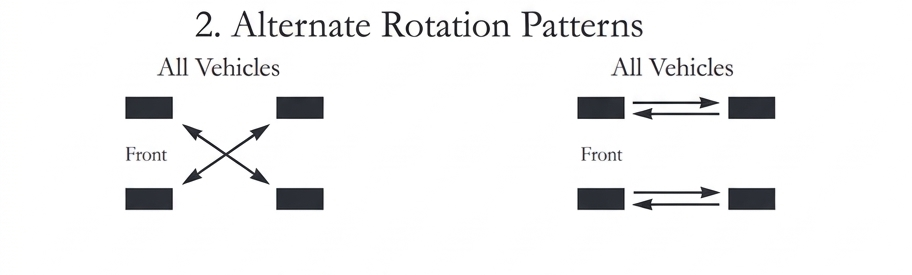
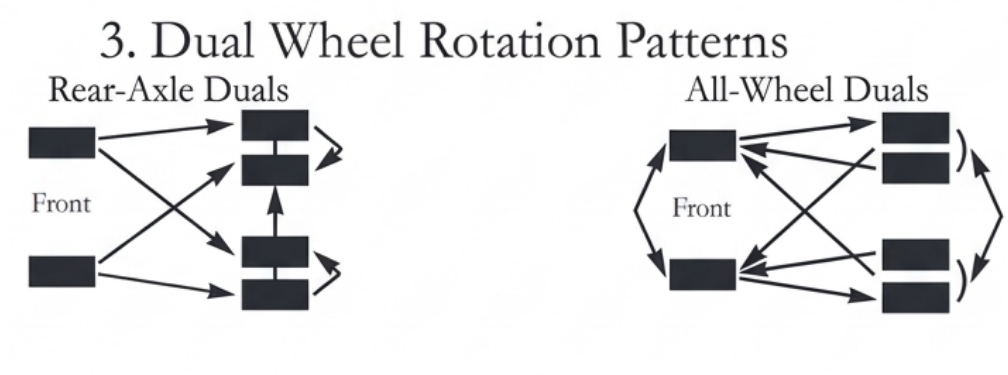
For example, the front tires may move to the rear, the rear tires may move to the front, or the tires may be crossed side to side depending on the drivetrain, tire type, and manufacturer recommendation.
This is important because tires do not all wear at the same rate.
- On many front-wheel-drive vehicles, the front tires often wear faster because they handle steering, braking, and power delivery
- On rear-wheel-drive vehicles, the rear tires may wear differently because they handle propulsion
- On all-wheel-drive vehicles, wear can still vary based on weight distribution, suspension design, and driving habits
Regular rotation helps even out these wear differences and can extend the usable life of the full set.
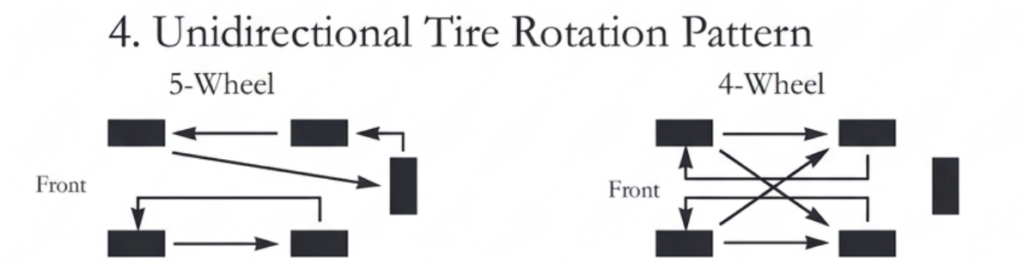
If your vehicle or tire manufacturer does not specify a different interval, tires are commonly rotated every 5,000 to 8,000 miles, or at the first sign of uneven wear.
What is wheel alignment?
Wheel alignment is the adjustment of the wheel and suspension angles so the tires contact the road properly and the vehicle drives as intended.
A proper alignment helps the vehicle:
- track straight
- steer predictably
- maintain stable road contact
- reduce abnormal tire wear
During an alignment, a technician typically checks and adjusts three main angles:
Camber
Camber is the inward or outward tilt of the tire when viewed from the front of the vehicle.
Toe
Toe describes whether the tires point slightly inward or outward when viewed from above.
Caster
Caster relates to the angle of the steering axis and affects straight-line stability and steering feel.
When these settings are off, the vehicle may pull to one side, the steering wheel may sit off-center, and the tires may wear unevenly.
Tire rotation vs wheel alignment: the real difference
Here is the cleanest way to think about it:
Tire rotation changes tire position.
Wheel alignment changes wheel angle.
That is the real difference.
Rotation is preventive maintenance. It is done regularly to help all four tires wear more evenly.
Alignment is corrective. It is done when the wheel angles are wrong, when the car no longer tracks correctly, or when tire wear patterns suggest something is off.
That is why they are related, but not interchangeable.
Why tire rotation matters
Tire rotation is a simple service, but it does a lot of quiet work behind the scenes.
1. It helps even out tread wear
Since the front and rear tires often wear differently, rotating them helps prevent one pair from wearing out much earlier than the other.
2. It can extend tire life
A tire that wears evenly is usually more useful for longer than one that wears down aggressively on just one axle.
3. It supports smoother performance
More even tread depth across the set can help the vehicle feel more balanced and consistent on the road.
4. It can help fuel efficiency indirectly
When tires wear more evenly and inflation is kept correct, rolling resistance and road contact are generally more consistent.
5. It improves value from the full set
Since many vehicles and tire makers prefer replacing all tires together, rotation helps keep tread depths closer across the set.
Why wheel alignment matters
Alignment has a different job, but it is just as important.
1. It improves straight-line stability
When the wheels are aligned correctly, the vehicle is more likely to travel straight with the steering wheel centered properly.
2. It improves steering response
Misalignment can make the steering feel vague, nervous, or awkward. Proper alignment helps the vehicle respond more naturally.
3. It reduces abnormal tire wear
Misalignment can create wear patterns that rotation alone cannot prevent, including inside-edge wear, outside-edge wear, and feathering.
4. It protects suspension and tire investment
Driving with poor alignment can wear tires faster and can add stress to suspension and steering components.
5. It improves safety
A vehicle that pulls, wanders, or behaves unpredictably during braking or cornering is not something you want to ignore.
Can tire rotation fix wheel alignment?
No.
This is one of the biggest misconceptions.
If the wheels are out of alignment, rotating the tires will not correct the underlying problem. It may temporarily move the wear pattern to a different corner of the vehicle, but the bad angle is still there.
In the same way, alignment does not erase tread wear that already happened. It only helps prevent more of that wear from continuing.
So if your tires already show abnormal wear, the right move is usually:
- inspect for alignment or mechanical issues
- correct the cause
- then rotate if appropriate
Signs you may need a tire rotation
You may be due for a rotation if:
- you have driven around 5,000 to 8,000 miles since the last one
- the front tires are wearing faster than the rear
- tread depth varies noticeably from one axle to the other
- your maintenance schedule says it is time
The first rotation is especially important. Waiting too long early in a tire’s life can allow wear differences to develop more deeply.
Signs you may need a wheel alignment
You may need an alignment if:
- the vehicle pulls left or right
- the steering wheel is off-center when driving straight
- the tires show inside-edge or outside-edge wear
- the tread feels feathered
- you recently hit a pothole, curb, or road debris
- you replaced suspension or steering parts
- the vehicle feels unstable or wanders on the highway
For many modern vehicles, especially front-wheel-drive vehicles and vehicles with independent rear suspension, a four-wheel alignment check is often the smarter approach.
Important tire rotation guidelines
Before rotating tires, the safest move is always to check the owner’s manual or tire manufacturer guidance.
A few key rules matter here:
- if no special interval is given, rotate every 5,000 to 8,000 miles
- rotate sooner if uneven wear starts showing
- correct misalignment, imbalance, or mechanical problems before rotation
- follow the correct rotation pattern for the drivetrain and tire type
- directional and asymmetrical tires may have rotation restrictions
- vehicles with staggered tire sizes may require special procedures
- a temporary-use spare should not be included in rotation
- a matching full-size spare can sometimes be included if recommended
After rotation, tire pressures should also be adjusted for the tires’ new positions, based on the vehicle placard or owner’s manual.
Important wheel alignment and tire wear facts
Misalignment is only one cause of abnormal tire wear.
Other causes can include:
- lack of tire rotation
- improper inflation
- tire and wheel imbalance
- damaged wheels
- dragging brakes
- worn shocks or struts
- worn tie rods, ball joints, or other steering and suspension parts
That is why a good diagnosis matters. Sometimes the tire wear pattern looks like alignment, but the real culprit is mechanical wear or inflation neglect.
Tire pressure matters too
A lot.
Even with perfect rotation and perfect alignment, poor inflation can still ruin a tire.
- Underinflation can cause rapid or irregular wear, weak handling, and lower fuel economy
- Overinflation can reduce traction and cause abnormal wear as well
- improper inflation can also increase the risk of tire damage or failure
So when comparing tire rotation vs wheel alignment, remember there is a third player in the room: correct tire pressure.
Final answer
Tire rotation and wheel alignment are both important, but they are not the same thing.
Tire rotation is regular maintenance that moves the tires to different positions to promote even wear.
Wheel alignment is a suspension adjustment that changes the wheel angles so the vehicle tracks properly and the tires contact the road correctly.
If you want the cleanest takeaway, use this:
Rotation helps your tires wear evenly. Alignment helps your vehicle drive straight and your tires wear correctly.
You often need both over the life of a vehicle, just not for the same reason.
Helpful Answers
Frequently Asked Questions
Quick answers to the biggest questions drivers ask about tire rotation and wheel alignment.
01 What is the difference between tire rotation and wheel alignment?
Tire rotation means moving the tires to different positions on the vehicle to help them wear more evenly. Wheel alignment means adjusting suspension angles such as toe, camber, and caster so the tires meet the road correctly and the vehicle tracks straight.
02 Do I need a wheel alignment every time I rotate my tires?
No. Tire rotation is routine maintenance, usually done every 5,000 to 8,000 miles. Wheel alignment is typically done when the car pulls, the steering wheel sits off-center, or tire wear suggests the wheels are out of specification.
03 Can tire rotation fix uneven wear caused by bad alignment?
No. Rotation may move the wear pattern to a different position, but it does not correct the underlying alignment problem. If alignment is off, that issue needs to be fixed first.
04 What are the signs that my car needs a wheel alignment?
Common signs include the vehicle pulling left or right, an off-center steering wheel, wandering on the highway, and abnormal tread wear such as inside-edge wear, outside-edge wear, or feathering.
05 How often should tires be rotated?
A common guideline is every 5,000 to 8,000 miles, unless your vehicle or tire manufacturer specifies a different interval. Earlier rotation may be smart if uneven wear starts showing up.
