Yes, you can replace run flat tires with regular tires, but the safest way to do it is to replace all four tires at once with matching conventional tires that meet your vehicle’s required size, load rating, speed rating, and inflation specifications.
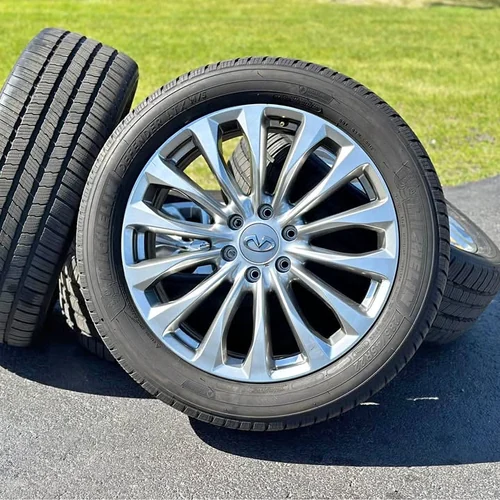
What you should not do is treat run flat and regular tires as a permanent mixed setup. In most cases, mixing them is only considered acceptable as a temporary emergency solution, not a long-term fix.
That matters because run flat tires and regular tires are built differently, and those differences can affect ride quality, handling, braking feel, stability, and how your vehicle responds when a tire loses pressure.
If your vehicle came with run flats from the factory, it is also smart to check the owner’s manual and confirm the replacement plan with a trusted tire professional or the vehicle manufacturer before making the switch.
Key Takeaways
- Yes, run flat tires can be replaced with regular tires.
- The best way to do it is to replace all four tires together.
- Do not permanently mix run flat tires and regular tires.
- A mixed setup may be used temporarily in an emergency, but only on a limited basis.
- Any replacement tire should match the vehicle’s required size, load index, speed rating, and inflation pressure.
- If you switch away from run flats, you also lose their temporary mobility advantage after a puncture.
Can run flat tires be replaced with regular tires?
Yes, but context matters.
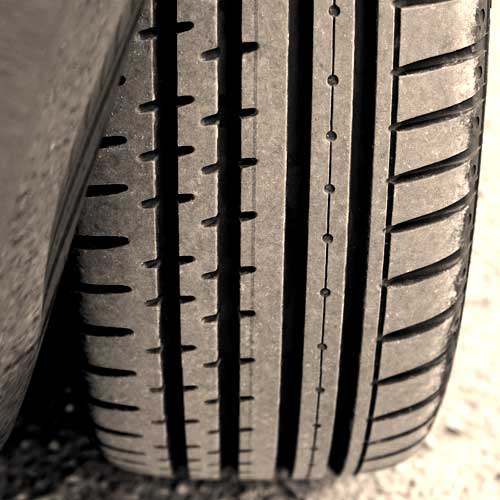
If your car currently has run flat tires and you want to switch to regular tires, the safest and most practical route is to install four matching conventional tires rather than mixing tire types on the vehicle.
A temporary one-off replacement with a regular tire may sometimes happen in an emergency when a matching run flat is not available. But that should only be a short-term fix to get you back on the road until the correct tire setup can be restored.
As a general rule, the more consistent the tire setup is across all four corners, the more predictable your vehicle will feel in everyday driving and emergency situations.
Why mixing run flat and regular tires is usually a bad idea
Run flat tires and regular tires do not behave the same way.
Run flat tires are designed to continue supporting the vehicle for a limited distance after a loss of air pressure. Conventional tires are not. That difference alone changes how the tire flexes, how it carries weight, and how it reacts when cornering, braking, or hitting uneven pavement.
A permanent mixed setup can lead to uneven response across the vehicle, which may affect:
- steering feel
- braking balance
- ride comfort
- cornering stability
- emergency handling
In plain terms, the car may feel less consistent and less predictable. That is why mixing run flats and regular tires is usually not recommended except as a limited emergency measure.
What happens if you replace all four run flats with regular tires?
Replacing all four run flat tires with regular tires is the most sensible way to make the change.
Doing so gives the vehicle a fully matched set, which helps preserve balanced handling and reduces the drawbacks that come from mixing two very different tire constructions.
That said, switching all four does not mean nothing changes. You are giving up the defining advantage of run flats: the ability to keep driving for a limited distance after a puncture or sudden loss of air pressure.
So if you move to conventional tires, you may need to think about roadside readiness again. Depending on your vehicle, that could mean carrying or adding:
- a spare tire
- a jack and lug tools
- a tire repair kit
- an inflator or sealant kit
Some vehicles originally equipped with run flats do not come with a spare, because the manufacturer expected the run flat system to cover that need.
Can you drive with a mix of run flat and regular tires?
Only as a short-term emergency solution.
If you are stranded and a matching run flat is unavailable, a conventional tire may sometimes be used temporarily. But it should match the original tire specifications as closely as possible, especially in:
- tire size
- load-carrying capacity
- speed rating
- recommended inflation pressure
Even then, the vehicle may not behave the same way it did before. Handling can change, and the mixed setup should be corrected as soon as possible.
A permanent mixed setup is not a good idea.
Run flat tires vs regular tires
Understanding the difference helps explain why the replacement decision matters.
Run flat tires
Run flat tires are built to provide limited mobility after a puncture or pressure loss. Many do this with reinforced sidewalls, though exact designs vary by manufacturer and tire type. Their job is not to let you drive forever with no air, but to help you reach a safe location or service center without immediately being stranded.
Many run flat tires have distance and speed limits after pressure loss, and those limits vary by brand and model. Drivers should always follow the tire manufacturer’s instructions rather than assuming every run flat works the same way.
Regular tires
Regular tires, also called conventional tires, are standard pneumatic tires that rely fully on air pressure to support the vehicle correctly. Once they lose significant air pressure, continuing to drive on them can quickly damage the tire and sometimes the wheel.
Conventional tires often provide a smoother ride than run flats because their sidewalls are generally more flexible, but they do not offer the same puncture mobility benefit.
Important note: self-sealing tires are not the same as run flats
This point is worth clearing up because many articles blur the two.
A self-sealing tire is not automatically a run flat tire. Self-sealing tires are designed to seal certain small punctures in the tread area, while run flat tires are designed to support the vehicle for a limited distance after pressure loss.
Some vehicles may use one system, the other, or neither. They should not be treated as interchangeable terms.
What about TPMS?
PMS matters a lot here.
Run flat tires are intended to work with a functioning tire pressure monitoring system, because a driver may not always notice a loss of pressure right away. If your vehicle came with run flats, TPMS plays an important role in warning you when something is wrong.
If you switch to regular tires, the TPMS still needs to function properly. Also, depending on the vehicle, warning logic, owner’s manual guidance, or manufacturer recommendations may have been written with the original run flat setup in mind.
So while replacing run flats with regular tires is possible, it should still be done with the vehicle’s original specifications in mind.
What should match when switching tires?
Whether you are making a temporary emergency replacement or switching all four tires permanently, the replacement tires should match the vehicle’s required specifications.
At minimum, you should verify:
- tire size
- load index
- speed rating
- recommended inflation pressure
- wheel compatibility
- manufacturer fitment guidance
This is where people go wrong. They focus only on size and ignore the rest. But a tire that is the correct size and the wrong load or speed rating is still not the right replacement.
Should you replace run flats with regular tires?
That depends on your priorities.
Switching to regular tires may make sense if you want:
- a softer ride
- lower tire replacement costs
- broader tire choices
- easier availability in some sizes
Staying with run flats may make more sense if you value:
- temporary mobility after a puncture
- not being stranded immediately after air loss
- keeping the vehicle closer to its original factory tire setup
There is no one-size-fits-all answer. The right choice depends on the vehicle, the driver, the road conditions, and how important puncture mobility is to you.
Is it safe to replace run flats with regular tires?
Yes, it can be safe if all four tires are replaced together with properly matched conventional tires and the setup meets the vehicle manufacturer’s requirements.
What is not considered a good long-term practice is mixing run flats and regular tires permanently. That is where safety, consistency, and vehicle behavior can start to drift in the wrong direction.
Final answer
Yes, you can replace run flat tires with regular tires. The safest way is to replace all four tires together with matching conventional tires that meet your vehicle’s required specifications.
Mixing run flat and regular tires should only be treated as a temporary emergency solution, not a permanent setup. If your vehicle originally came with run flats, check the tire placard, owner’s manual, and manufacturer guidance before switching, especially if your car does not carry a spare.
In other words: switching all four can work, mixing them long term usually should not.
Helpful Answers
Frequently Asked Questions
Quick answers to the biggest questions drivers ask before switching from run flat tires to regular tires.
01 Can I replace run flat tires with regular tires?
Yes. You can replace run flat tires with regular tires, but the safest approach is to replace all four tires together with matching conventional tires that meet your vehicle’s required size, load rating, speed rating, and inflation specifications.
02 Can I mix run flat tires and regular tires on the same car?
It is not recommended as a permanent setup. A mixed setup may only be acceptable as a temporary emergency solution when a matching replacement is unavailable. Even then, the tire should match the original size, load capacity, speed rating, and inflation requirement as closely as possible.
03 What happens if I switch from run flats to regular tires?
You may gain a more comfortable ride and wider tire choices, but you also lose the limited mobility benefit run flats provide after a puncture. If your vehicle does not carry a spare, you may need to add a spare tire, repair kit, inflator, or roadside support plan.
04 Do I still need TPMS if I switch tires?
Yes. A working TPMS is especially important with run flat tires, but it should still function properly even after switching to regular tires. If your car originally came with run flats, always make sure the new setup is compatible with the vehicle’s monitoring system and manufacturer recommendations.
05 Is it safe to replace just one run flat tire with a regular tire?
Only as a temporary emergency measure. It should not be treated as a long-term solution, because mixing tire constructions can affect handling, ride balance, and overall predictability.
