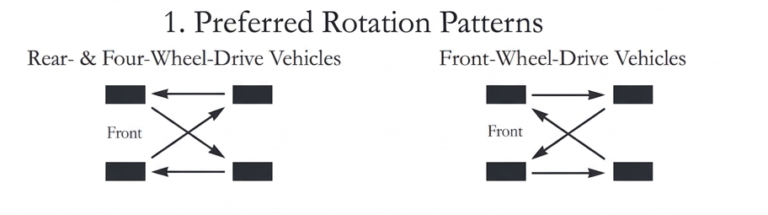
Preferred Tire Rotation Pattern

Tire Rotation vs Wheel Alignment: What’s the Difference?

Quick answers to the biggest questions drivers ask about tire rotation and wheel alignment. 01 What is the difference between tire rotation and wheel alignment? Tire rotation means moving the tires to different positions on the vehicle to help them wear more…

Summer Vs Winter Vs All-Season Tires

Summer Vs Winter Vs All-Season Tires

Summer Tires: Optimal performance above 60°F (15°C), performance decline below 45°F (7°C), mostly feature asymmetric tread designs. Winter Tires: Best below 45°F (7°C), softest compound, extensive siping, typically have directional tread patterns. All-Season Tires: Ideal in temperatures from 32°F (0°C) to 90°F…

Do All-Season Tires Wear Out Faster?

Do All-Season Tires Wear Out Faster?

All-season tires do their best between 32°F and 90°F. But when it's really hot, they don't hold up as well as summer tires because they can't get rid of heat as effectively. And in really cold weather, they're not as good as…

All-Season Tires For Summer

Are All-Season Tires Good For Summer?

The bottom line: All-season tires are versatile but not optimal in extreme temperatures. They are engineered to perform within a temperature range of 32°F (0°C) to 90°F (32°C), beyond which their efficiency starts to decline. So, they aren't able to provide you…

Comfort of all-season tires

Are All-Season Tires Comfortable And Quiet Enough?

The versatility of all-season tires stems from their design, engineered to handle a variety of road conditions, including dry, wet, and even light snow. While they may not offer the same level of dry and wet traction as summer tires, nor the…

Different Types Of All-Season Tires

Different Types Of All-Season Tires

The versatility of all-season tires stems from their design, engineered to handle a variety of road conditions, including dry, wet, and even light snow. While they may not offer the same level of dry and wet traction as summer tires, nor the…

Pros And Cons of All-Season Tires

Pros And Cons of All-Season Tires – Are They Worth It?

These tires are particularly appealing for their cost-effectiveness, eliminating the need for separate sets of winter and summer tires, thus saving on purchase and maintenance costs. Furthermore, their moderate tread life and reduced road noise contribute to a comfortable and economical driving…

Wet performance of All-Season Tires

Are All-Season Tires Good In Rain?

Since majority of all-season tires have ample sipes and grooves, they provide pretty decent results in rainy seasons. Though their performance gets heavily affected by temperature changes, interestingly. For example, in warmer conditions, they can't outperform summer tires in terms of both…