Hi Folks. I'm Ozmen, and I work as a tire designer. I understand finding a tire isn't easy, as there are so many variables involved. But with me around, tire selection would never bother you again.
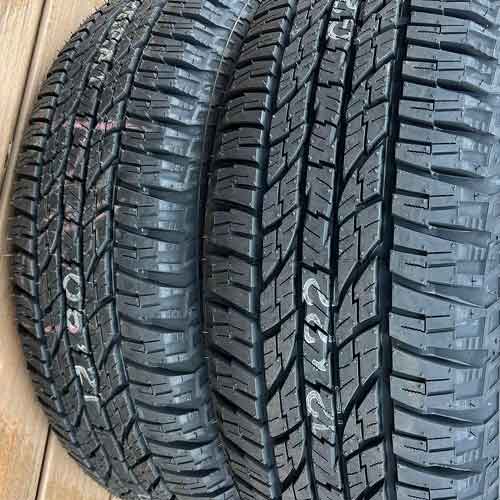
In the end, these two tires succeed in different ways. The Sumitomo Encounter A/T wins where traction, tread depth, and long-term durability matter most. It is the better pick for drivers who want stronger wet grip, better self-cleaning in loose terrain, and a tire that starts with more rubber to work with. The Yokohama Geolandar A/T G015 wins where refinement matters more. It rides more smoothly, makes less noise, uses a bit less fuel, and offers a slightly better winter-road character. So the better tire depends on what kind of all-terrain driver you are. If your priority is capability and longevity, go with the Sumitomo. If your priority is comfort and daily road manners, go with the Yokohama.
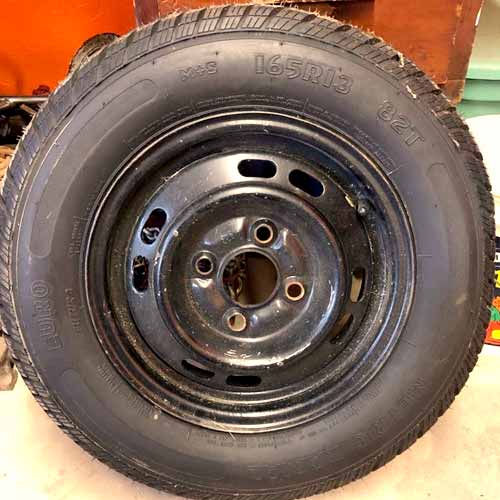
Spare tires are not outdated. They are just more varied than they used to be. A matching full-size spare is still the best emergency tire option if your vehicle can accommodate one. A donut spare is a useful backup, but only for short, low-speed use. And if your vehicle came without a spare, you need to understand whether you are relying on run-flats, an inflator kit, or roadside assistance alone. The biggest mistake is not choosing the wrong spare. It is assuming the spare you have is ready when you have never checked its pressure, age, or condition.
Can you replace just one tire? Usually, no. It is not the preferred fix, and on many vehicles it is the wrong one. The safest route is to replace all four tires together. If that is not possible, replace two as a pair and install the newer tires on the rear axle. If one-tire replacement is truly unavoidable, do it only after checking the vehicle’s manual, matching the tire specs exactly, and making sure tread-depth differences stay within what the manufacturer allows.
Now I'd like to mention here that I wouldn't have done this article so beautifully if it wasn't for the top notch industry guidance available , especially thankful to: Tire Industry Association guidance on tire conditions and serviceability U.S. tire industry guidance on inflation, wear, and safety practices Multiple vehicle owner’s manual recommendations for tire pressure, rotation intervals, and alignment checks For vehicle-specific pressure, load, and service recommendations, always check the owner’s manual and tire placard.
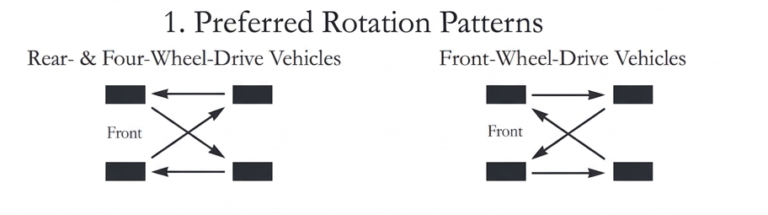
Quick answers to the biggest questions drivers ask about tire rotation and wheel alignment. 01 What is the difference between tire rotation and wheel alignment? Tire rotation means moving the tires to different positions on the vehicle to help them wear more evenly. Wheel alignment means adjusting suspension angles such as toe, camber, and caster so the tires meet the road correctly and the vehicle tracks straight. 02 Do I need a wheel alignment every time I rotate my tires? No. Tire rotation is routine maintenance, usually done every 5,000 to 8,000 miles. Wheel alignment is typically done when the car pulls, the steering wheel sits off-center, or tire wear suggests the wheels are out of specification. 03 Can tire rotation fix uneven wear caused by bad alignment? No. Rotation may move the wear pattern to a different position, but it does not correct the underlying alignment problem. If alignment is off, that issue needs to be fixed first. 04 What are the signs that my car needs a wheel alignment? Common signs include the vehicle pulling left or right, an off-center steering wheel, wandering on the highway, and abnormal tread wear such as inside-edge wear, outside-edge wear, or feathering. 05 How often should tires be rotated? A common guideline is every 5,000 to 8,000 miles, unless your vehicle or tire manufacturer specifies a different interval. Earlier rotation may be smart if uneven wear starts showing up.
Quick answers to the biggest questions drivers ask before switching from run flat tires to regular tires. 01 Can I replace run flat tires with regular tires? Yes. You can replace run flat tires with regular tires, but the safest approach is to replace all four tires together with matching conventional tires that meet your vehicle’s required size, load rating, speed rating, and inflation specifications. 02 Can I mix run flat tires and regular tires on the same car? It is not recommended as a permanent setup. A mixed setup may only be acceptable as a temporary emergency solution when a matching replacement is unavailable. Even then, the tire should match the original size, load capacity, speed rating, and inflation requirement as closely as possible. 03 What happens if I switch from run flats to regular tires? You may gain a more comfortable ride and wider tire choices, but you also lose the limited mobility benefit run flats provide after a puncture. If your vehicle does not carry a spare, you may need to add a spare tire, repair kit, inflator, or roadside support plan. 04 Do I still need TPMS if I switch tires? Yes. A working TPMS is especially important with run flat tires, but it should still function properly even after switching to regular tires. If your car originally came with run flats, always make sure the new setup is compatible with the vehicle’s monitoring system and manufacturer recommendations. 05 Is it safe to replace just one run flat tire with a regular tire? Only as a temporary emergency measure. It should not be treated as a long-term solution, because mixing tire constructions can affect handling, ride balance, and overall predictability.
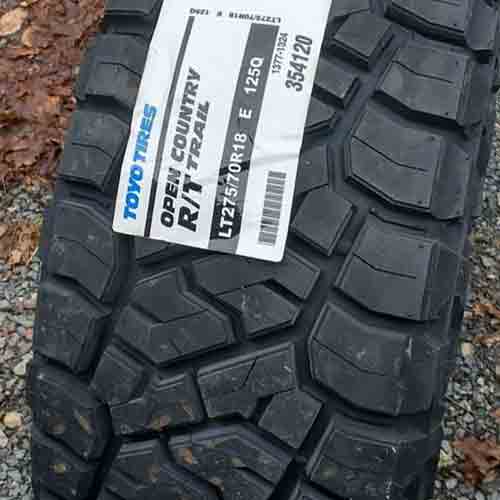
So, here is the truth. If your truck is a daily driver that sees dirt roads, snowy commutes, and the occasional camping trip, buy the Toyo Open Country AT3. It is quieter, better in the rain and snow, and will save you money on gas and tires in the long run. It is one of the best all-rounders on the market. (You can see where it ranks in my list of best all-terrain tires). If your truck is a weekend warrior. If you seek out mud holes, rock crawl on the weekends, and don't mind the highway hum because the music is loud enough, buy the Toyo Open Country RT Trail. It is a legitimate hybrid tire that brings Mud-Terrain capability without being completely unlivable on the street. Choose the tool that fits the job.
In conclusion, the Falken Sincera SN250 A/S demonstrates varied performance across different conditions. In dry settings, it offers effective handling and decent directional grip but struggles with lateral traction compared to competitors. Its wet performance is commendable, maintaining good grip and handling despite some hydroplaning challenges due to inadequate lateral water evacuation. In snowy and icy conditions, the tire's performance is hindered by its lack of flexibility and insufficient biters, affecting its traction capabilities. Ride quality is generally smooth on less challenging surfaces, but the tire's rigidity impacts comfort on larger bumps and reduces its effectiveness in vibration absorption. And lastly, the tire's fuel efficiency is compromised by its heavier design, which increases rolling resistance and energy loss.
So overall the RT 45 tire does pretty great in almost all conditions. It excels in longitudinal grip due to its redesigned tread pattern and lighter weight, enhancing braking traction and reducing wear. And in handling, it demonstrates precise steering and robust braking, particularly during corner entry and mid-cornering phases, leading to consistently faster lap times compared to competitors. Moreover, in wet conditions, the General's tire again provides superb traction values. Additionally, the RT45's fuel efficiency benefits from a lighter structure and a revised rubber compound that boosts its economy without sacrificing comfort.
So in summary, the Goodyear Wrangler Boulder MT distinguishes itself across various performance metrics, making it a decent choice in the world of mud-terrain tires. From dry roads where it demonstrates respectable grip despite limited rubber-to-road contact, to the challenging muddiness where it excels in mud evacuation and traction, this tire proves versatile and reliable. Plus its performance on sand and rocks showcases its adaptability, with features that enhance flotation and prevent digging in, while its robust design and enhanced shoulder lugs enable effective navigation through rugged terrains. And yes, despite its somewhat louder noise profile and less effective vibration damping on-road, the tire's overall competence in handling diverse and challenging conditions solidifies its top-ranking status among specialized off-road tires.
In summary, the Yokohama AVID Ascend LX excels in various performance metrics, particularly in dry conditions where its rigid rubber composition and well-designed tread features offer excellent directional and lateral grip. It provides a responsive steering feedback which complements its handling capabilities, enabling smooth navigation and precise cornering. While the tire's comfort levels are generally high, with effective noise dampening and stability under normal conditions, it slightly underperforms in absorbing large bumps. In wet conditions, although it faces challenges in grip due to the stiffness of the rubber, it compensates with superior hydroplaning resistance and steering response. Lastly, snow performance is robust, owing to the tire's ability to foster effective snow-to-snow contact, although its ice traction is average due to the absence of a 3PMSF rating and thermal adaptive rubber.
In conclusion, the Yokohama Geolandar A/T XD offers a robust performance across a spectrum of terrains, exhibiting strengths such as effective mud clearance, good rock traction, and superior wet handling due to its well-designed sipes and tread patterns. Despite its versatility in off-road conditions and commendable winter performance marked by a 3PMSF rating, the tire's dry performance and durability present some concerns. The average braking distances and cornering grip fall short when compared to competitors, and its softer rubber composition may hasten wear, particularly under harsh conditions. Enhancements in tread design and structural reinforcement could elevate its overall efficacy and lifespan, making it a more formidable contender in the rugged terrain tire market.